

Fear and Greed: The Two Emotions That Ruin Trades
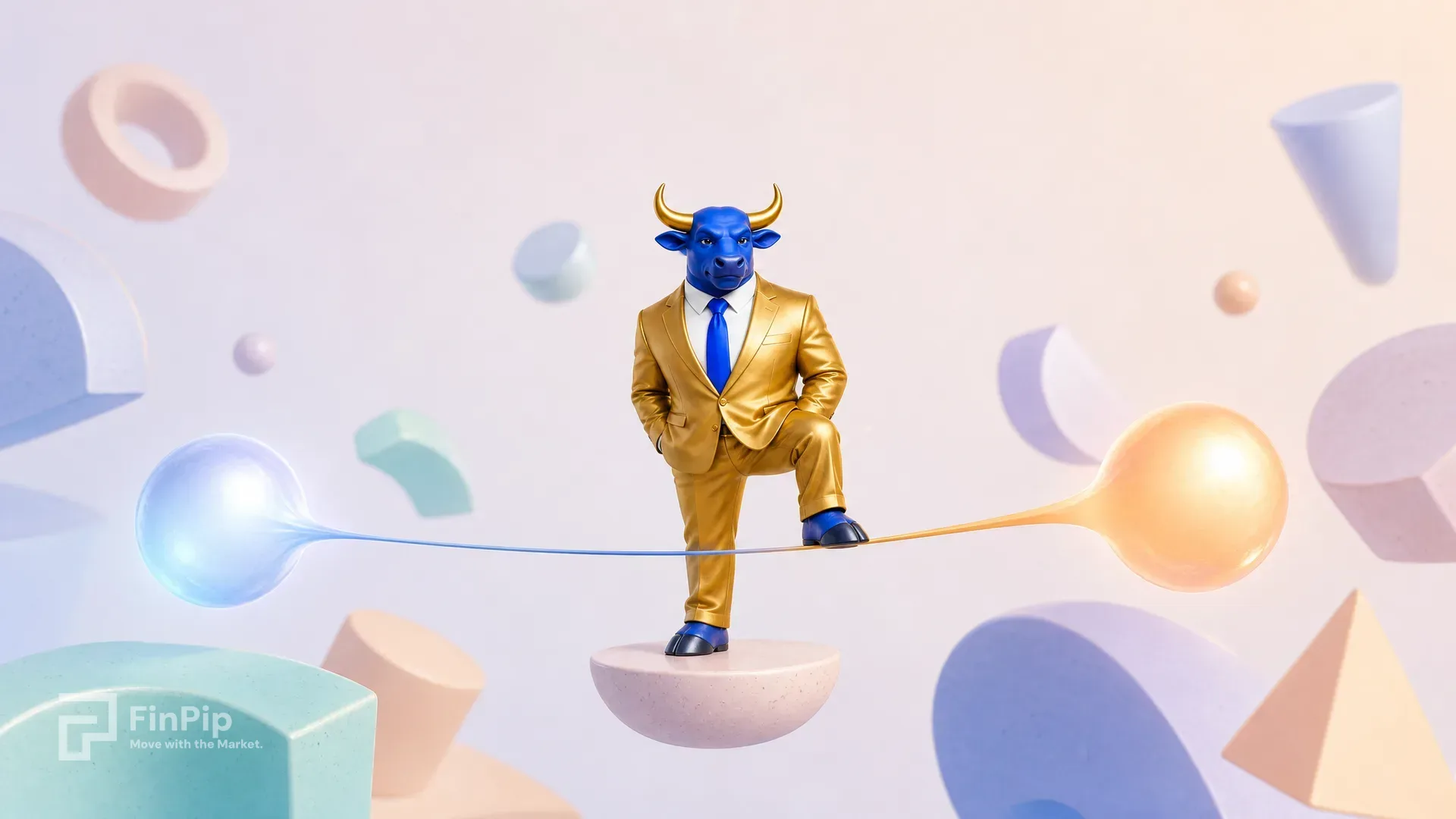
Ask experienced traders what actually cost them money early in their careers, and very few say “a bad strategy.” Most say some version of the same thing: they knew what they should have done, and did something else because of how they felt in the moment. Fear and greed are the two emotions most responsible for that gap between plan and action.
Why these two emotions dominate trading
Markets are built on uncertainty — no one knows the next price move with certainty, only probabilities. That uncertainty is exactly the environment where fear and greed thrive, because both emotions offer a shortcut: fear promises safety by avoiding risk, and greed promises reward by chasing more of it. Neither shortcut is reliable, but both feel compelling in real time, which is why they override a calmly written trading plan so easily.
How fear shows up in trading decisions
Exiting winners too early
A trade moves into profit, and instead of following the planned take-profit level or trailing stop-loss, fear whispers that the market could reverse at any moment. The trader closes the position for a small gain — sometimes a fraction of what the setup was actually capable of delivering. Do this consistently and a strategy’s average win shrinks well below what backtesting suggested, even if the entries themselves were accurate.
Hesitating on valid setups
The opposite failure is just as costly: a strategy signals a valid entry, but fear of being wrong causes a trader to wait “for more confirmation,” by which point the favorable risk-reward ratio has already deteriorated. Repeated often enough, this hesitation means a trader only ever takes the setups that have already worked out — filtering for hindsight rather than following the rules that were tested in advance.
Avoiding the market after a loss
A loss, especially a larger one, can trigger a fear response that keeps a trader sidelined well past the point where it’s rational — skipping genuinely good setups because the last trade still stings. This is different from a planned pause after hitting a daily loss limit; it’s an emotional withdrawal that isn’t part of any deliberate rule.
How greed shows up in trading decisions
Oversizing positions
Greed frequently overrides sound position sizing. A trader convinced a setup is a “sure thing” risks far more than their normal 1-2% per trade, turning what should be one of many small, manageable bets into a single position that can meaningfully damage the account if it fails — and setups are never actually sure things.
Holding winners past the plan
The mirror image of fear’s early exit: a trade reaches its planned target, but greed argues for holding on for more. Sometimes this pays off; often the market reverses and gives back the gain, or worse, turns the trade into a loss because no adjusted stop-loss was ever set to protect the unrealized profit.
Chasing the market (FOMO)
FOMO — fear of missing out — is greed’s most common everyday expression. A market makes a sharp move, a trader who wasn’t positioned feels the urge to jump in immediately, and ends up entering late, near the top or bottom of the move, with a poor entry price and no clearly defined risk level. This is one of the most reliable ways to turn a good market move into a personal loss.
Adding to losing positions
Sometimes greed and loss aversion combine: a losing trade gets an additional position added at a worse price, in hopes of a reversal that would turn the whole thing profitable. Without a predefined rule for this (which most sound strategies don’t include), it’s simply a bigger bet on a trade that has already invalidated its original thesis.
The underlying bias: loss aversion
Much of this fear-and-greed cycle traces back to loss aversion — the well-documented tendency for losses to feel roughly twice as psychologically painful as equivalent gains feel pleasurable. Loss aversion explains why traders will take a small, certain profit too early (fear of losing it) while letting a loss run far past its planned stop-loss (reluctance to accept the loss as final). Understanding that this bias is a normal feature of human psychology — not a personal failing — is the first step to designing rules that route around it rather than fighting it moment to moment.
Practical ways to manage both emotions
- Decide everything before the trade is open. Entry, stop-loss, take-profit and position size should be set when you’re calm and objective, not adjusted mid-trade based on how the position feels.
- Use hard stop-losses, not mental ones. A stop-loss placed in the market executes without requiring you to make a decision under pressure. A “mental stop” you plan to execute manually is far easier to abandon in the moment.
- Size positions so no single trade matters too much. Proper position sizing — commonly risking 1-2% of equity per trade — reduces the emotional intensity of any one outcome, which in turn reduces the pull of both fear and greed.
- Write down the reason for every trade. A trading journal that records your reasoning at entry makes it much easier to spot, in hindsight, which trades were rules-based and which were emotionally driven.
- Build a cooling-off rule after losses and after wins. A short pause after a loss reduces the odds of revenge trading; a short pause after an unusually large win reduces the odds of overconfident position sizing on the next trade. See overtrading and revenge trading for more on the loss-side pattern.
- Judge results over a batch of trades, not one at a time. Since normal variance means even a sound strategy loses regularly, evaluating trade-by-trade encourages emotional whiplash. Evaluating over 20-30 trades reflects whether the process is actually working.
Fear and greed never fully disappear
It’s worth setting realistic expectations here: even experienced traders continue to feel fear and greed. The goal isn’t to eliminate these emotions — that isn’t realistic — but to build a process robust enough that the emotions don’t dictate the decision. That distinction, between feeling an impulse and acting on it, is most of what separates disciplined trading psychology from a plan that only works on paper.
Key takeaways
- Fear causes traders to exit winners too early, hesitate on valid setups, and avoid the market irrationally after a loss.
- Greed causes traders to oversize positions, hold winners past their plan, chase moves out of FOMO, and add to losing trades without a rule.
- Both emotions are amplified by loss aversion, a well-documented bias where losses feel more painful than equivalent gains feel good.
- Predefining entries, stop-losses, take-profits and position size before a trade removes many of the in-the-moment decisions where fear and greed take over.
- A trading journal and a batch-based (not trade-by-trade) review process help separate genuine strategy problems from ordinary emotional noise.
Risk warning: Trading forex and CFDs involves leverage and a high level of risk. Emotional discipline improves execution of a plan but does not eliminate market risk or guarantee profits. Only trade with money you can afford to lose.
Frequently asked questions
- What is fear and greed in trading?
- Fear and greed are the two dominant emotions that distort trading decisions. Fear causes traders to exit winning trades too early or avoid valid setups entirely, while greed causes them to oversize positions, hold winners too long hoping for more, or chase a market that has already moved.
- How do I stop trading on fear and greed?
- The most effective method is removing in-the-moment decisions: define your entry, stop-loss, take-profit and position size before opening a trade, then follow that plan regardless of how the trade feels once it's live. A trading journal that tracks the emotion behind each decision also helps identify your specific triggers.
- Is there a way to measure market-wide fear and greed?
- Several sentiment indicators attempt to gauge aggregate fear and greed across markets, often built from volatility, momentum and positioning data. These can offer useful context on crowd sentiment, but they describe the market's mood, not your own trading behavior, which is what actually determines your results.